Showing posts with label compassion. Show all posts

Thursday, October 1, 2015

Be Kind to Yourself

For the past few weeks, my thoughts have been focused on Kindness!

At the beginning of September, I kicked off the Kind Kids Club with 1st grade students at Star Academy, and last Friday we began the PACT Acts of Kindness Club with our homeschool students!
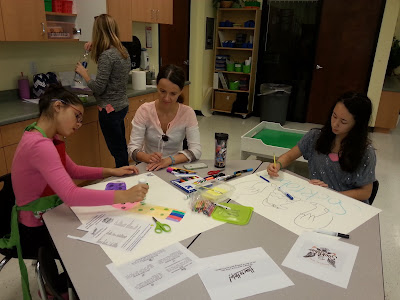


Students and Parents from the PACT Acts of Kindness Club making posters for our #Socktober Donation Drive which runs the month of October.

   
Kindergarten students received "Kindness Capes" made by the 1st Grade students. Kindergarten students get to wear them in class when they demonstrate kindness or caring for others!

I feel very grateful that as part of my job, I have to opportunity to share the concept of kindness with children and families. I really enjoy seeing the excitement on students' faces when they've done something kind for someone else and hearing about the happiness it brings them.

Last year, when we were learning about kindness, we talked a lot about the places where you can show kindness to others: at home, at school, and in your community. This year, I'm bringing the focus of kindness inward and talking about how you can also be kind to...
yourself.

Students are always surprised to hear this! I usually get quite a few perplexed looks and furrowed brows. I know they're thinking, "How can you be kind to yourself?"

As I explain more, many of them realize they are already practicing self-kindness:
  • Choosing to eat healthy and fresh foods to nourish their bodies
  • Staying active and playing outside
  • Getting enough sleep at night 
  • Making safe choices: wearing a seatbelt in the car, wearing a helmet when biking, etc.
  • Taking care of ourselves: brushing our hair, brushing our teeth, taking a bath/shower, etc.
  • Planning time to relax and have fun
However, one aspect of self-kindness that's not so well practiced is called 
self-compassion. 


Self-compassion is extending understanding and encouragement to yourself when things don't go your way or when you've made a mistake. 

We can choose to speak kindly to ourselves instead of critically. 

        Instead of:                                                             

        "I'm so stupid!"
        "Nobody likes me."
        "I am worthless."
        "It's all my fault."
        "Bad things always happen to me!"
        "I'll never be good at that."
        "I can't believe I said that."
        
        We can say:

       "I'm trying my best. I won't give up!"
       "I'm going to try some new ways to make friends."
       "I have the right to feel good. I am worth it. "
       "I did my best but things still didn't work out. 
       "It's okay when things don't go my way. That's life!"
       "My hard work will pay off. It takes time to learn new things."
       "Everyone makes mistakes. I'm going to think of ways to repair that relationship."

Essentially, we should try and treat ourselves the way we would treat a close friend who was going through the same problem. This is important, because the thoughts and words we use to talk to ourselves eventually become our experience. In addition, self-compassion or kindness helps reduce anxiety, depression, insecurity and is associated with more consistent feelings of self worth.


According to Dr. Shilagh Mirgain, PhD, this kind of self-compassion helps children build a stable sense of self, not dependent on social status, awards/trophies, or good grades:


"Kindness begins when we understand that we all struggle. Teach your children to talk kindly to themselves versus being critical. This builds a stable sense of self. Self-criticism isn't helpful and only produces a variety of negative consequences, including feeling badly about oneself. Next time your children start saying something critical, point this out to them and then teach them to reframe these thoughts into something positive and forgiving."


"The way we communicate with our children establishes a blue print for how they will eventually communicate with themselves."


"Talk to them in a non-critical way. Teach them how to self soothe during difficult times. Say to a small child, 'Let's practice hugging ourselves like mom and dad do to make you feel better. You can do this for yourself when you feel bad to remember how much you are loved.' Teach older children to put their hand on their heart to self-soothe when upset. These small gestures help them value and feel good about themselves just as they are no matter what is going on." 

"Remind your children that they are not alone in experiencing this difficult thing, other kids feel the exact same way. Everyone struggles, feels inadequate, does not get approved of, or fails at something in life. It's part of our common humanity. This helps normalize what a child is going through and reduces shame and embarrassment over mistakes made and not feeling good enough."

(Dr. Shilagh Mirgain, PhD, UW Health)


So the next time you find yourself facing a challenge or realize you've made a mistake - take a moment to breathe (with the kids) and extend some kindness to yourself...and if there's any kindness left over, pass it on to the next person you see! 

"It's okay when things don't go my way!" 


"Be Kind...Pass it on!"
1st Grade Kindness Capes

Thursday, December 5, 2013

Building Friendships and Healthy Peer Relationships


These days, it is impossible to turn on the television or read the headlines without hearing about a reference to bullying. Talk of bullying seems to have grabbed the national spotlight and is often the focus of news stories involving young people. The frequency of these stories, coupled with their lengthy coverage, often describes bullying as an “epidemic,” when in reality, about 20-30% of students nationwide in grades 6-12 reported experiencing bullying (stopbullying.gov).


Nevertheless, this is still a prevalent and serious problem for many young people. Reports indicate that most bullying occurs during the middle school years, with students engaging in verbal and social types of bullying (stopbullying.gov). However, it is important to realize that there is not a single profile or type of student who “bullies.” Young people who engage in this behavior can be either well connected socially or marginalized. In addition, those who are bullied sometimes bully others. Because persistent bullying can increase feelings of isolation, rejection, depression, and anxiety, those who bully others and are bullied themselves are at the greatest risk for mental health and academic problems (stopbullying.gov).


Teaching Tolerance, an organization founded by the Southern Poverty Law Center in 1991 and dedicated to “reducing prejudice, improving intergroup relations and supporting equitable school experiences for our nation’s children” recently published an article titled, “There are No Bullies” (www.tolerance.org). The article points out that the word “bully” is an ill-defined word that “paints the kids who are bullies as ogres or monsters.” Those who are labeled as bullies and are met with strong disciplinary approaches are often left with a fixed identity that is difficult to change:


“Bullying is a behavior, not an identity... by doing this, we’re really doing everyone a great disservice. We’re missing a golden opportunity to teach them. We need to remember that kids and teens who [bully]...are still growing up. When we help them, we’re also helping those they target - and those who might have been bullied by them in the future.”


Rather than dwelling on stories about bullying behavior and its outcomes, parents, teachers, and other adults can help prevent this behavior by teaching children about empathy and relationship choices. Experts and educators alike recommend comprehensive programming “designed to promote social and emotional competencies” as well as mentorship groups or buddy programs to help students develop relationships, navigate transitions more successfully, and teach new students about the school’s values (www.tolerance.org).


Schools can prevent bullying behavior by establishing a culture of respect for all students, and rewarding individual students when they demonstrate those values in the classroom, with adults, and most importantly, with their peers. Teachers can also hold weekly classroom meetings, to focus on specific topics and problem-solve issues that arise outside of the classroom - ultimately leading to solutions and building trust and respect between students.


At home, experts recommend talking to young people about healthy relationships, behavior, and choices (www.tolerance.org). This includes talking to children and teens about their behavioral role models and the strategies they’re using in their relationships with others. Find out if these strategies are working for them, and discuss some of the long-term consequences of these choices. Rather than delivering the information as a threat, parents can encourage their student to use this information as a tool to help them take control of their choices and their future.


Empathy is also a key component to this issue. Parents, teachers, and adults can talk to students about cultivating kindness and generosity at home and in the large community. Another article from Teaching Tolerance (www.tolerance.org), titled “Kindness Isn’t Just for Elementary School” recommends that all educators begin integrating social-emotional learning into their curricula:


“Encourage students to give specific compliments to classmates during peer reviewing or presentations, write positive comments on a class blog, or conduct a kindness experiment where they can plan and carry out random acts of kindness as a homework assignment.”


This article also discusses the latest research in compassion, which shows that the brain can be trained for kindness:


“In a University of Oregon study, economist Bill Harbaugh and psychologist Ulrich Mayr found that charitable generosity activated the reward center of the brain, indicating that our brains are naturally made for kindness. Furthering this research are studies on compassionate meditation such as one conducted at the University of Wisconsin-Madison, which illustrated that through repeated practice of mindful generosity, we can increase empathetic responses to others."


Ultimately, children and teens engaging in bullying behaviors need the opportunity to learn that what they put into a relationship - kindness, respect, understanding - they will receive in return from their friends and peers. Providing all young people with opportunities to experience positive social interactions and practice empathy is the key to preventing bullying behaviors. The more tools young people have to navigate their relationships with peers, the better prepared they will be to handle difficult social situations throughout their lives.


Please visit the Parents Page for a new list of Reading Recommendations related to empathy and building healthy relationships.

Wishing you a Happy Thanksgiving and many things to be thankful for!

Caroline
chines@natomascharter.org