Showing posts with label counseling. Show all posts

Thursday, October 1, 2015

Be Kind to Yourself

For the past few weeks, my thoughts have been focused on Kindness!

At the beginning of September, I kicked off the Kind Kids Club with 1st grade students at Star Academy, and last Friday we began the PACT Acts of Kindness Club with our homeschool students!
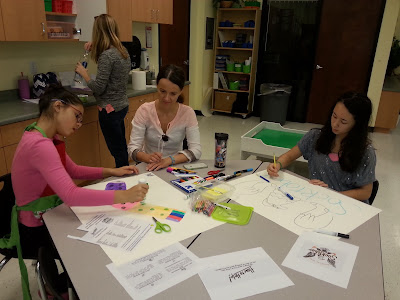


Students and Parents from the PACT Acts of Kindness Club making posters for our #Socktober Donation Drive which runs the month of October.

   
Kindergarten students received "Kindness Capes" made by the 1st Grade students. Kindergarten students get to wear them in class when they demonstrate kindness or caring for others!

I feel very grateful that as part of my job, I have to opportunity to share the concept of kindness with children and families. I really enjoy seeing the excitement on students' faces when they've done something kind for someone else and hearing about the happiness it brings them.

Last year, when we were learning about kindness, we talked a lot about the places where you can show kindness to others: at home, at school, and in your community. This year, I'm bringing the focus of kindness inward and talking about how you can also be kind to...
yourself.

Students are always surprised to hear this! I usually get quite a few perplexed looks and furrowed brows. I know they're thinking, "How can you be kind to yourself?"

As I explain more, many of them realize they are already practicing self-kindness:
  • Choosing to eat healthy and fresh foods to nourish their bodies
  • Staying active and playing outside
  • Getting enough sleep at night 
  • Making safe choices: wearing a seatbelt in the car, wearing a helmet when biking, etc.
  • Taking care of ourselves: brushing our hair, brushing our teeth, taking a bath/shower, etc.
  • Planning time to relax and have fun
However, one aspect of self-kindness that's not so well practiced is called 
self-compassion. 


Self-compassion is extending understanding and encouragement to yourself when things don't go your way or when you've made a mistake. 

We can choose to speak kindly to ourselves instead of critically. 

        Instead of:                                                             

        "I'm so stupid!"
        "Nobody likes me."
        "I am worthless."
        "It's all my fault."
        "Bad things always happen to me!"
        "I'll never be good at that."
        "I can't believe I said that."
        
        We can say:

       "I'm trying my best. I won't give up!"
       "I'm going to try some new ways to make friends."
       "I have the right to feel good. I am worth it. "
       "I did my best but things still didn't work out. 
       "It's okay when things don't go my way. That's life!"
       "My hard work will pay off. It takes time to learn new things."
       "Everyone makes mistakes. I'm going to think of ways to repair that relationship."

Essentially, we should try and treat ourselves the way we would treat a close friend who was going through the same problem. This is important, because the thoughts and words we use to talk to ourselves eventually become our experience. In addition, self-compassion or kindness helps reduce anxiety, depression, insecurity and is associated with more consistent feelings of self worth.


According to Dr. Shilagh Mirgain, PhD, this kind of self-compassion helps children build a stable sense of self, not dependent on social status, awards/trophies, or good grades:


"Kindness begins when we understand that we all struggle. Teach your children to talk kindly to themselves versus being critical. This builds a stable sense of self. Self-criticism isn't helpful and only produces a variety of negative consequences, including feeling badly about oneself. Next time your children start saying something critical, point this out to them and then teach them to reframe these thoughts into something positive and forgiving."


"The way we communicate with our children establishes a blue print for how they will eventually communicate with themselves."


"Talk to them in a non-critical way. Teach them how to self soothe during difficult times. Say to a small child, 'Let's practice hugging ourselves like mom and dad do to make you feel better. You can do this for yourself when you feel bad to remember how much you are loved.' Teach older children to put their hand on their heart to self-soothe when upset. These small gestures help them value and feel good about themselves just as they are no matter what is going on." 

"Remind your children that they are not alone in experiencing this difficult thing, other kids feel the exact same way. Everyone struggles, feels inadequate, does not get approved of, or fails at something in life. It's part of our common humanity. This helps normalize what a child is going through and reduces shame and embarrassment over mistakes made and not feeling good enough."

(Dr. Shilagh Mirgain, PhD, UW Health)


So the next time you find yourself facing a challenge or realize you've made a mistake - take a moment to breathe (with the kids) and extend some kindness to yourself...and if there's any kindness left over, pass it on to the next person you see! 

"It's okay when things don't go my way!" 


"Be Kind...Pass it on!"
1st Grade Kindness Capes

Tuesday, April 29, 2014

All About ADHD

Image Credit: Mind Med 

ADHD, or Attention Deficit Hyperactivity Disorder, is a biological disorder that is one of the most researched topics in child and adolescent mental health. Although the definition of ADHD has changed many times in the last decade (reflecting changes in conceptualization of the disorder and the newest research) the needs of the individuals and families living with ADHD have not. 

ADHD is not a mythical disorder. ADHD is a neurobiological disorder recognized by the American Medical Association, American Psychiatric Association, and American Pediatric Association (among many others). ADHD is more than a disorder of attention, hyperactivity, or poor impulse control, although these characteristics are generally the most observed.

"ADHD is not just a temporary state that a child will outgrow, or a normal phase of childhood that will pass in time. It is not behaviors caused by parental failure to discipline the child, or willfulness caused by bad temperament  but a real disorder that can be confusing, heartbreaking and nerve-wracking to the child and family that surrounds them. Even though there are no outward signs that a handicap is present, ADHD, like other disabilities, can bring significant challenges to the child and their family." (Lougy, DeRuvo, & Rosenthal, 2009). 


 Image Credit: Not Just a Bean Bag

ADHD is currently understood as a developmental impairment of the brain's self-management system (executive functioning). There is no relationship between intelligence and ADHD. Rather, there seems to be an important relationship ADHD and the ability to regulate emotions, as well as motivation. 

"Impairments of ADHD are not due to a global excess or lack of a specific chemical within or around the brain. The primary problem is related to chemicals manufactured, released, and reloaded...Persons with ADHD tend not to release enough of these essential chemicals, or to release and reload them too quickly. ADHD medication helps to improve this process."
(Thomas Brown, Ph.D. - ADDitudemag)

ADHD disrupts a person's ability to manage his/her behavior or to act with certain consequences in mind - which explains why individuals with ADHD struggle most when they must complete tasks with no "immediate payoff" - for school-age children and adolescents, this can mean homework, reading, writing, or household responsibilities. If the task at hand does not offer immediate reinforcement or reward, chances are the individual with ADHD will struggle to complete the given task.

"Goal-directed, future-oriented behavior demands that a person be able to motivate himself/herself internally. This ability is described as willpower, self-discipline, ambition, persistence, determination, or drive. ADHD disrupts this mechanism, leaving those with the disorder 'low on fuel' in motivating behavior toward future rewards.

If a task provides motivation and offers immediate gratification - such as playing a video game - a person with ADHD will have no problem sticking with it. Give these kids a task for which there is no external reinforcement or payoff, however, and their persistence falls apart. They jump from one uncompleted activity to another and become bored and disengaged."
(Carol Brady, Ph.D., Robert M.A. Hirschfeld, M.D., Russell Barkley, Ph.D. - ADDitudemag)

"Clinical data indicate that executive function impairments are situationally-variable; each person with ADHD tends to have some specific activities or situations in which he/she has no difficulty in using executive functions that are significant impaired for him/her in most situations. Typically, these are activities in which the ADDer has a strong personal interest or about which he/she believes something unpleasant will follow quickly if he does not do the task right now."
(Thomas Brown, Ph. D. - ADDitudemag)


    Image Credit: The Crimson White

The American Psychiatric Association (APA) Diagnostic and Statistical Manual of Mental Disorders (DSM-V) separates ADHD by the categories of Inattention, Hyperactivity, Impulsivity.

Click HERE for ADDitudemag.com's Checklist of 18 ADHD Symptoms.

In general, symptoms of ADHD manifest differently for every individual. How these symptoms present themselves as well as when they become a significant impairment (childhood vs. adolescence vs. adulthood) can vary greatly from person to person.

"Recent research has shown that many with ADHD function well during childhood and do not manifest any significant symptoms until adolescence or later, when greater challenges to executive function are encountered. Over the past decade research has shown that impairing symptoms of ADHD often persist well into adulthood. However, studies have also shown that some individuals with ADHD during childhood experience significant reductions in their impairments as they grow older."
(Thomas Brown, Ph. D. - ADDitudemag)

Research suggests that there are significant gender-related differences in the manifestation of ADHD. Girls are generally less impulsive and are more likely to exhibit the inattentive type of ADHD. Research also indicates that children diagnosed with Autism Spectrum Disorder or Oppositional Defiant Disorder (ODD) are often likely to have a co-occurring diagnosis of ADHD.

    Image Credit: Silicon Valley Brain Spect Imaging, Inc. 

Unfortunately, there are still many misconceptions and myths about individuals with ADHD. It can be difficult to understand ADHD, as symptoms can vary greatly between individuals and change situationally. Many struggle to understand why someone with ADHD can maintain focus or "hyperfocus" on things that interest them, like video games, but have a hard time sticking with other things, like school work. This can lead to assumptions that the child is being "willfully disobedient" or lacking discipline. Dr. Robert Hirschfeld, M.D., describes his son's experience with ADHD and the common misconceptions that accompany ADHD:

"Unfortunately, when it comes to brain disorders, such as ADHD, depression, or other neurobiological conditions, a harmful attitude creeps in : the belief that attention deficit disorder, and other disorders originating in the mind, reflect 'bad character' and that all it takes is more willpower to overcome them.

As a psychiatrist, and also as the father of an ADHD child, I know how destructive this view is. Many people with depression suffer for years because they've tried to makes themselves feel better, and they still can't function. Coworkers and spouses become frustrated and blame the sufferer when attempts to 'jolly' a person out of a depression don't work. Their lack of understanding adds guilt and shame to the long list of problems that depressed people cope with.

My son could not will himself to not have ADHD. Trying to get him to change his ADHD behavior didn't work. And had we stopped at that, his life would have been marked by frustration and failure. Without proper medical, psychological, and educational interventions, no amount of willpower could have helped. Fortunately, our continued interventions enabled our son to share his own destiny and experience many successes."


    Image Credit: nwfdailynews

The primary treatment for ADHD is a combination of medication and therapy. Experts in the field agree that medication should be considered for children with ADHD, whose symptoms are interfering with social, emotional, or academic functioning. Types of behavior therapy and alternative treatments can be helpful in managing ADHD symptoms, however, they do not take the place of medication. Experts also agree that children should be told about their diagnosis. Often, many parents will ask the doctor to tell the child about ADHD and to answer any questions he/she might have. Keeping the diagnosis a secret does a disservice to the child, and ultimately communicates that there is something wrong with having ADHD. There are now a variety of books and resources (see the Resources section later on) for children newly diagnosed with ADHD. These materials can help further explain ADHD, answer questions, and normalize any feelings or worries they might have.

"'If your child has been diagnosed with ADHD and is struggling, he probably needs medication, '" says Stephen Copps, M.D., an ADHD specialist in Macon, Georgia. 'Medication is the cornerstone of therapy. It's appropriate for most children with diagnosable ADHD. It is not a last resort.'

Of course, it's essential that your child's diagnosis of ADHD is a reliable one. ADHD-like symptoms can be caused by a range of disorders, including anxiety, depression, and obsessive-compulsive disorder. In some cases, a child's symptoms arise from the frustration associated with having to struggle with a learning disorder. 

Make sure the doctor uses the diagnostic criteria spelled out in the...Diagnostic and Statistical Manual of Mental Disorders, commonly referred to as the DSM-IV [note: the newest edition is the DSM-V]. The doctor should get input from your child's teacher as well as from you, his/her parents."
(ADDitudemag.com)


"Studies and Clinical trials have shown that ADHD medications give the following benefits to some children and adults: 
  • improve the working memory, classroom behaviors, the motivation to execute tasks, and to persist in solving problems
  • minimize boredom, distractibility when doing tasks, and emotional outbursts
  • increase test performance, rates of graduation, and other achievements that can have lasting effects
  • normalize structural abnormalities in specific brain regions"
(Thomas Brown, Ph. D. - ADDitudemag)


    Image Credit: ADDitudemag.com

What Can I do?
As a parent or teacher of a student with ADHD, it can be difficult to know how to best support the student and provide them with the tools they need to be successful. Certain behaviors associated with ADHD can be frustrating for parents and teachers trying to help, as well as the student, who may often face disappointment, shame, or negative self-esteem as a result of behaviors they cannot control.

Expert Advice:
"To help a child with ADHD complete work when there is little immediate reward or interest in the task, adults can establish artificial rewards to sustain motivation. Earning tokens, chips, or other external rewards will help them persist. Without such rewards, they cannot themselves must the intrinsic willpower to stick with a task. So, if your child with attention deficit disorder needs to read an entire chapter of a textbook, offer a reward for each segment of the work. Eventually, he will be able to sustain attention for longer periods, as tenacity becomes a habitual response to work."
(Russell Barkley, Ph.D. - ADDitudemag)

"Providing ADHD kids with structure--and supporting a habit of following that structure--helps them develop self-management skills that offset the impulse to veer off track. People with ADHD who never learn these skills are in for a bumpy ride. Dismissing typical ADHD behaviors as 'boys being boys' denies kids the help they need to become independent, responsible teens and adults."
(Carol Brady, Ph.D. - ADDitudemag)


ADDitudemag.com is a comprehensive resource for any parent, teacher, or professional working with a child that has ADHD. ADDitude Magazine has clear, user-friendly information and advice from experts in the field of ADHD and mental health practitioners. Parents can find parenting strategies, education and learning resources, first-person stories from individuals dealing with ADHD, online communities for parents to share tips and resources, and much more. Their free webinars offered are very informative and provide the newest information about treating ADHD from experts around the country: http://www.additudemag.com/webinars/

My Favorite ADDitude Articles for Parents and Teachers:

Classroom and School Accomodations for Children with ADHD

ADHD at School: Giving Instructions and Helping Children Follow Directions

ADHD Parenting Tips from an ADHD Coach

12 Parenting Strategies that Work for ADHD Kids

ADHD Secrets My Teacher (And Parent) Should Know


Image Credit: FTSI Connecting

Additional Resources

ADHD Webpage
Richard Lougy, MFT
http://www.thesekidsaredrivingmecrazy.com/
Free resources and professional services, for parents, teachers, and other caretakers of children with ADHD.

Books for Parents 

A New Understanding of ADHD in Children and Adults: Executive Function Impairments
Thomas E. Brown


The Gift of ADHD
Lara Honos-Webb

1-2-3 Magic
Thomas W. Phelan


Smart but Stuck: Emotions in Teens and Adults with ADHD
Thomas E. Brown, Ph.D.


Books for Children

The Survival Guide for Kids with ADD or ADHD
John F. Taylor


It's Hard To Be A Verb
Julia Cook 


Super Emotions! A Book for Children with ADD/ADHD
Lionel Lowry


Learning to Slow Down and Pay Attention: A Book for Kids about ADHD
Kathleen G. Nadeau

Monday, January 20, 2014

Dream Big

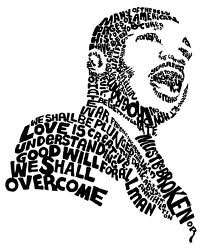
“If I cannot do great things, I can do small things in a great way.” - Dr. Martin Luther King, Jr.


Each January, we celebrate the life of Dr. Martin Luther King in our schools and communities, and remember his inspiring words, which echoed from the steps of the Lincoln Memorial and through a crowd of 250,000 during the March on Washington.


Dr. King dreamed of brotherhood, justice, equality, and dreamed that one day, we would all be free. He sought peace and dedicated his whole life to pursuing it.


Teaching our children about PEACE is a great way to honor the memory of Dr. King. However, children must be taught about the hard work and determination needed to achieve peace.


Dr. King did not accomplish his work quickly, or easily. He struggled, he was rejected by others, and he was faced with opposition time and time again.


It is easy to associate peace with quiet or calm, when in fact, it is just the opposite. In order to create peace, you have to be bold and courageous!


Dr. King was more than a bystander. He knew that remaining silent in the face of injustice was just as harmful as the outright support of inequality or discrimination.


To honor Dr. King, we can teach our children to stand up and speak up in the face of unfair treatment. We can support our children by teaching them skills to advocate for themselves, but also for others, especially those who may not be able to advocate for themselves.


We can teach our children to hope and dream. Dream BIG. Our children may have small hands and small feet, but their potential is immense. Anything they can do, can be done in a great way. That’s all that matters.


Finally, we can ask our children about their dreams: “What are your dreams for peace?” I imagine they are bright and colorful and filled with themes of love and equality.


One of my favorite young dreamers is Kid President. If you haven't seen one of his many YouTube videos already, he is definitely worth watching! This 9-year-old has created a phenomenon of encouragement and inspiration. He gives young people a voice and ideas to change the world! Since becoming Kid President, he has had the opportunity to meet singers, actors, and even President Barack Obama. Kid President shares his Dream:


Below is a short biography about 9-year-old Robby. He has already overcome some significant challenges in his life:


You can watch more of his videos, follow the blog, and read more about Kid President at:

http://www.kidpresident.com/

I also came across a story about a group of fifth grade students from Massachusetts who turned an after-school enrichment club into a larger-than-life demonstration of peace. In 2004, these students set a goal: to make the biggest book in the world about peace. The students sent thousands of letters to people around the world, asking for their responses to the following questions:

-What is world peace?
-Will there ever be world peace?
-Where would you like to see the world in 20 years?

The students received more than 3,000 responses from teachers, veterans, politicians, and even famous visionaries such as Nelson Mandela, the Dalai Lama, and former President Jimmy Carter. Their story is inspiring. You can read more about these peace-seeking students and how their work has influenced their plans for the future:

http://www.pagesforpeace.org/home.html


In addition, you can watch videos about their work and the teacher who led this project:


Dr. King’s work is never finished. And the work of future generations is just beginning.

Dream BIG.


Thursday, December 5, 2013

Building Friendships and Healthy Peer Relationships


These days, it is impossible to turn on the television or read the headlines without hearing about a reference to bullying. Talk of bullying seems to have grabbed the national spotlight and is often the focus of news stories involving young people. The frequency of these stories, coupled with their lengthy coverage, often describes bullying as an “epidemic,” when in reality, about 20-30% of students nationwide in grades 6-12 reported experiencing bullying (stopbullying.gov).


Nevertheless, this is still a prevalent and serious problem for many young people. Reports indicate that most bullying occurs during the middle school years, with students engaging in verbal and social types of bullying (stopbullying.gov). However, it is important to realize that there is not a single profile or type of student who “bullies.” Young people who engage in this behavior can be either well connected socially or marginalized. In addition, those who are bullied sometimes bully others. Because persistent bullying can increase feelings of isolation, rejection, depression, and anxiety, those who bully others and are bullied themselves are at the greatest risk for mental health and academic problems (stopbullying.gov).


Teaching Tolerance, an organization founded by the Southern Poverty Law Center in 1991 and dedicated to “reducing prejudice, improving intergroup relations and supporting equitable school experiences for our nation’s children” recently published an article titled, “There are No Bullies” (www.tolerance.org). The article points out that the word “bully” is an ill-defined word that “paints the kids who are bullies as ogres or monsters.” Those who are labeled as bullies and are met with strong disciplinary approaches are often left with a fixed identity that is difficult to change:


“Bullying is a behavior, not an identity... by doing this, we’re really doing everyone a great disservice. We’re missing a golden opportunity to teach them. We need to remember that kids and teens who [bully]...are still growing up. When we help them, we’re also helping those they target - and those who might have been bullied by them in the future.”


Rather than dwelling on stories about bullying behavior and its outcomes, parents, teachers, and other adults can help prevent this behavior by teaching children about empathy and relationship choices. Experts and educators alike recommend comprehensive programming “designed to promote social and emotional competencies” as well as mentorship groups or buddy programs to help students develop relationships, navigate transitions more successfully, and teach new students about the school’s values (www.tolerance.org).


Schools can prevent bullying behavior by establishing a culture of respect for all students, and rewarding individual students when they demonstrate those values in the classroom, with adults, and most importantly, with their peers. Teachers can also hold weekly classroom meetings, to focus on specific topics and problem-solve issues that arise outside of the classroom - ultimately leading to solutions and building trust and respect between students.


At home, experts recommend talking to young people about healthy relationships, behavior, and choices (www.tolerance.org). This includes talking to children and teens about their behavioral role models and the strategies they’re using in their relationships with others. Find out if these strategies are working for them, and discuss some of the long-term consequences of these choices. Rather than delivering the information as a threat, parents can encourage their student to use this information as a tool to help them take control of their choices and their future.


Empathy is also a key component to this issue. Parents, teachers, and adults can talk to students about cultivating kindness and generosity at home and in the large community. Another article from Teaching Tolerance (www.tolerance.org), titled “Kindness Isn’t Just for Elementary School” recommends that all educators begin integrating social-emotional learning into their curricula:


“Encourage students to give specific compliments to classmates during peer reviewing or presentations, write positive comments on a class blog, or conduct a kindness experiment where they can plan and carry out random acts of kindness as a homework assignment.”


This article also discusses the latest research in compassion, which shows that the brain can be trained for kindness:


“In a University of Oregon study, economist Bill Harbaugh and psychologist Ulrich Mayr found that charitable generosity activated the reward center of the brain, indicating that our brains are naturally made for kindness. Furthering this research are studies on compassionate meditation such as one conducted at the University of Wisconsin-Madison, which illustrated that through repeated practice of mindful generosity, we can increase empathetic responses to others."


Ultimately, children and teens engaging in bullying behaviors need the opportunity to learn that what they put into a relationship - kindness, respect, understanding - they will receive in return from their friends and peers. Providing all young people with opportunities to experience positive social interactions and practice empathy is the key to preventing bullying behaviors. The more tools young people have to navigate their relationships with peers, the better prepared they will be to handle difficult social situations throughout their lives.


Please visit the Parents Page for a new list of Reading Recommendations related to empathy and building healthy relationships.

Wishing you a Happy Thanksgiving and many things to be thankful for!

Caroline
chines@natomascharter.org

Tuesday, October 1, 2013

Stress and Children


Stress is the body's reaction to a physical or emotional situation that requires a person to adapt or change. Stress is a normal part of everyday life and can be positive  (birthday party, new pet, birth of a sibling) or negative (separation, rejection, parent losing a job, death of a family member). Children respond to stress differently than adults. Their responses to stress are based on what they have seen or experienced and most have limited coping skills; meaning that the smallest changes can have a very large impact on a child's feelings of safety and security. Even everyday family obligations, practices, events, and routines can create stress and tension for a young child.

Stress in children often manifests in an overt, physical manner, and includes some of the following behaviors:
  • crying
  • sweaty palms
  • running away
  • aggressive or defensive outbursts
  • rocking or self-comforting
  • headaches
  • stomachaches 
  • stuttering
  • nervous fine motor behaviors: hair twirling or pulling, chewing and sucking, biting of skin or fingernails
  • toileting accidents 
  • sleep disturbances (nightmares, 
  • decreased appetite (or other noticeable changes in eating habits)
  • depression or avoidance
  • excessive worrying
  • hyper-vigilance
  • clingy behavior or persistant concern about "what comes next"
  • regressive behaviors (those of an earlier developmental stage)

Below is a worksheet for children which helps them identify stress in their own body. 


It is important to recognize that children will exhibit many of these signs at different points in their lives, as a natural response to home or school situations, and life events. However, persistent signs of stress, which are disrupting a child's academic progress or significantly affecting a child's health or home environment should be addressed by a professional. 

What parents, teachers, and adults can do:
  • help children identify their feelings and respond to stress in healthy ways
  • provide a safe and secure environment
  • be selective about your child's media exposure (news, television, internet)
  • encourage expression of concerns, worries, and fears
  • allow opportunities to make choices and have some control around decision-making
  • encourage physical activity
  • be aware of situations and events that are stressful to your child
  • help children identify coping strategies (ask for help, walk away, etc.)
  • teach children relaxation techniques (count backwards, play with play dough, imagine your favorite place in your mind)
  • practice positive self-talk ("I can do this")
  • recognize signs of unresolved or continuing stress (on-going nightmares, new occurrence of bedwetting, etc.)
  • keep children informed of necessary and anticipated changes
  • seek professional help or advice when signs of stress do not decrease or disappear 


I highly recommend Feelings Charts for children, which show faces with a variety of feelings. These are very useful for helping children identify their emotions. I have included two different types of Feelings Charts as a downloadable attachments to this post. The Simple Feelings Chart is from the Conscious Discipline website, which has a number of great resources for parents and teachers. 


I have also posted a fun activity in the Parents section of my website, which gives step-by-step directions for making your own stress ball! This activity is great for all ages, K-12 (young children will require parent assistance). Stress balls can be decorated in a lot of fun ways!


Please contact me if you have any questions, comments, or suggestions for Counseling at Natomas Charter School.

Thank you!

Caroline
chines@natomascharter.org

Sunday, September 1, 2013

Transitions

As we begin the new school year, students can have a difficult time transitioning to a new school, or starting a new routine (such as Kindergarten). Younger students can feel overwhelmed with the new structure, academic expectations, and interacting with new peers. Younger students can also have difficulty leaving parents at drop-off time, especially after spending the summer months at home. 

To address this transition, I began the school year reading one of my favorite books to the Transitional Kindergarten and Kindergarten classes. 


"The Kissing Hand" is a wonderful story about a young raccoon named Chester, who is ambivalent about his first day of school:

"I don't want to go to school," he told his mother. "I want to stay home with you. I want to play with my friends. And play with my toys. And read my books. And swing on my swing. Please may I stay home with you?" Mrs. Raccoon took Chester by the hand and nuzzled him on the ear. "Sometimes we all have to do things we don't want to do," she told him gently. "Even if they seem strange and scary at first. But you will love school once you start."

Chester's mother teaches him a secret way to carry her love with him to school. She gives him a kiss in his hand, which he can carry with him wherever he goes, and will never wash away. Whenever Chester is lonely, he is reminded of the kissing hand, which provides comfort and reassurance.


The "Kissing Hand" can be incorporated into your own routine, or used as a way to help ease transitions to school on more difficult days. 


Other Transitional objects can be helpful for students, such as a small stuffed animal (tucked into their backpack), a note with a message, a small smooth stone, or a piece of soft fabric. Transitional objects are items which provide emotional comfort and help encourage the transition to independence. Utilizing a transitional object is a healthy way to cope with stress and is supported by child development professionals. This recent article from the American Academy of Pediatric's webpage healthychildren.org  provides some ideas for making the first few weeks of school easier, and includes transitional objects on their list of suggestions.

I found this article from the New York Times about comfort and transitional objects very interesting (Perri Klass, M.D., March 2013). "A Firm Grasp on Comfort" discusses the role of transitional objects in the development of our children: 

"Indeed, Dr. Howard suggested that as many as 25 percent of young women going to college take along something identifiable as a childhood transitional object. The young adult going off to college, with or without stuffed animals or scraps of a favorite old blanket, should be a reminder that the challenges of separation - and the consolations and complexities of attachment - are not developmentally confined to the first years of life."

"The familiar image of the small child and the transitional object, generally sweet and mildly humorous, occasionally frantic and even desperate, reminds us that learning to negotiate, and even enjoy, partings and reunions is part of the whole assignment, for parents and children."

------------------------------
Please contact me if you have any questions related to this post or would like to know more about Counseling at Natomas Charter School. 

I look forward to working with students and families this year!

Caroline
chines@natomascharter.org